

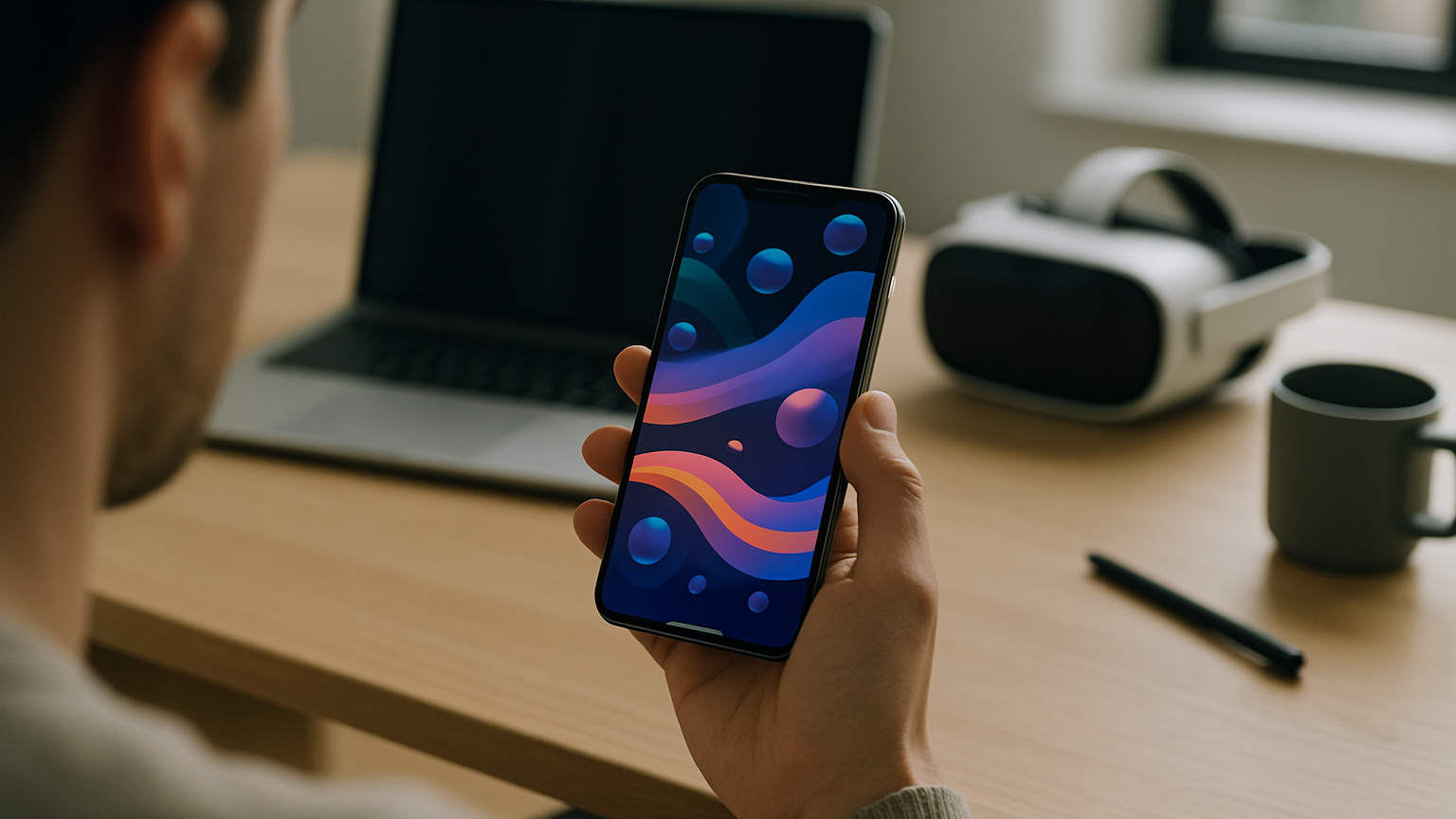
Brand awareness isn’t just about racking up impressions; it’s about memory, conversation and that quiet moment when someone says, “I’ve seen this before.” When you hear AR vs VR vs MR in the same breath, it can feel like alphabet soup. Yet each medium drives presence differently: one prioritizes reach, another depth, the third anchors your story to a place. The right choice depends on your audience, distribution and the moment you want to own. In practice, many teams start with AR to prove creative and distribution, then graduate to VR or MR once they secure devices and space.
This guide gives you a practical way to choose. We’ll map the tech to three awareness levers—reach, immersion and shareability—then walk through real scenarios: museums, retail and training. You’ll see where each shines, where it struggles and what to measure so you can defend the budget with data. And yes, we’ll say the quiet part out loud: sometimes the flashiest tech isn’t the best fit for your goals or timeline.
AR vs VR vs MR For Brand Awareness: A Practical Comparison
Augmented reality thrives on reach and speed. It rides on the phone your audience already has, launches from a QR code or a link, and layers effects atop reality. That makes AR ideal for mass-scale moments—packaging that comes alive, store signage that reveals a 3D product, social filters people pass among friends. Creative can be snackable (10–20 seconds), but it still imprints distinct brand assets like shape language, sound or a hero animation. For awareness, AR is the lowest-friction on-ramp with the highest potential for organic spread.
Virtual reality trades scale for depth. It asks for a headset and, in return, delivers a focused three-to-seven-minute story with presence, spatial audio and interaction that locks to memory. For live events, venues and brand centers, VR becomes your centerpiece: a guided narrative that people talk about afterward. It excels when you need to shift perception, teach a complex idea, or make someone feel your product value in their bones. No headset, no VR—simple.
Mixed reality anchors digital content to a physical place—an exhibit, a showroom, a factory floor—so people can walk around and collaborate while seeing the same holograms. MR shines for persistent, revisitable experiences: museums, science centers, training spaces and premium retail. Shareability sits between AR and VR: it’s less native to social, but its on-site wow factor drives word-of-mouth and repeat visits. When you weigh AR vs VR vs MR for awareness, think of MR as your long-game for place-based presence. If you’re exploring production and rollout options, start by scanning our AR and VR services to see common paths from concept to deployment.
Where Each Technology Wins: Reach, Immersion And Shareability
On reach, AR is the clear winner. A single link can activate thousands without venue logistics or hardware. On immersion, VR dominates: it isolates distraction and gives you minutes of undivided attention that typical mobile placements can’t match. MR is the champion of contextual stickiness—tying your story to a location so the space itself becomes your media channel. Translate that to budgeting and you get a simple idea: AR optimizes cost-per-impression, VR optimizes cost-per-minute-engaged, and MR optimizes cost-per-return-visit.
Shareability follows a different playbook. AR generates user-generated content because it’s social-native and flattering when designed well. VR is harder to share directly, but pairs beautifully with a staffed capture station that films reactions and compiles short edits—great PR fodder. MR leans into on-site photos and group moments that spark word-of-mouth. Real life check: most people share AR effects only if they look and feel good in them, so design with front-camera behavior in mind.
Friction might be the single biggest decider in AR vs VR vs MR for awareness. If you can’t put headsets in hands, you won’t get the depth VR promises. If your venue lighting, space mapping or device management is shaky, MR will stumble. Need millions of impressions in a two-week window with a tight budget? This isn’t the moment for a custom VR or MR build—lean on AR, validate the creative, and save the heavy lift for your next tentpole.
Brand Scenarios That Stick: Museums, Retail And Training
Let’s ground this in places where brands actually meet people. Museums and science centers fight for dwell time and repeat visits. Retail and live events need instant engagement and shareable moments that pull crowds. Training must convert awareness into skill. The right medium changes with the space, staff and story.
Museums And Science Centers: Anchored MR Exhibits
MR turns a static object into a living exhibit. Spatial anchors let visitors circle an artifact while labels, simulations and narrative characters sit precisely in space. You can run multilingual overlays, scaffold difficulty for kids and adults, and support group discovery without breaking the flow. Because the content is tied to the room, the exhibit stays fresh across seasons with content updates instead of rebuilds. Over time, the space itself becomes your brand asset.
This approach is not for constantly changing pop-ups or galleries that rotate weekly—anchoring and calibration need stability. It also asks for device management and staff training, which should be planned from day one. If you can commit to a steady footprint and operational rhythm, MR pays off with repeatable, high-quality awareness every time a visitor walks through.
Retail And Live Events: From Snap AR To Immersive VR Booths
On the retail floor, AR is your first responder. A shelf tag or window graphic launches a try-on, a color configurator or a 3D product demo hovering above the aisle. People can capture and share in seconds, and you can track scans with UTMs and per-store QR codes. For launches and festivals, AR scavenger hunts or geo-anchored effects extend your footprint beyond the booth. It’s fast, repeatable and great for top-of-funnel momentum.
When you need a signature moment, a staffed VR booth becomes the crowd magnet. Think a guided, three-minute journey that dramatizes your innovation with spatial audio, haptics and a clear narrative arc. Queue design, hygiene flow and lead capture matter as much as the headset. For a taste of how a flagship piece can feel, explore the Mission Orbit immersive experience—it shows how a single, polished centerpiece can anchor an entire event presence.
Education And VR Training Technology: From Recall To Mastery
Training needs more than awareness—it needs behavior change. VR excels here because people learn by doing: they perform steps, make safe mistakes and receive immediate feedback. That practice builds muscle memory and confidence, which translates into fewer errors and faster ramp-up back on the job. If your brand also educates customers or partners, this same depth builds trust and long-term presence. See how dedicated stacks support this use case in our overview of VR training technology.
VR training is not ideal if content changes daily or if you can’t deploy devices at scale—logistics will swamp the win. But with a stable curriculum and a clear skills gap, it turns awareness into mastery in a way slides never will. And the halo effect is real: the same high-fidelity assets can power AR teasers, web explainers and event loops.
Designing For Presence: AR & VR Product Design And Application Development Backed By 140 Projects
Building presence is as much craft as code. At RTE Global we combine emerging technology with strategic and creative thinking across AR & VR product design, application development, immersive environments and UX for VR/AR. Our teams deliver custom 3D applications across mobile, web, virtual reality, augmented reality and desktop, tuned to the business context—education, retail, training, sales and beyond. The goal is consistent: transform assets into experiences that people remember and share.
From concept to launch, we plan, strategize and deploy in partnership with you. That includes concepting and treatments, wireframes and user journeys, pre-visualizations, art direction, 2D/3D animation, realtime VFX, spatial audio engineering, QA and rollout. With 140 completed projects, we know where scope hides and how to keep polish high without blowing timelines. If you want to see how decisions move from discovery to deployment, take a look at our software development process.
A quick fit check before you dive in. If you need millions of impressions next week on a micro-budget, go AR-first with lightweight creative and save custom VR/MR for a tentpole. If your experience hinges on a physical space you can control, MR earns the long game. And if you can’t get devices into hands, forget VR for now.
Measuring Awareness Lift: Metrics, Benchmarks And Next Steps
Awareness lifts when more people recognize, recall and talk about you—and when that attention costs less over time. Set a baseline (current organic mentions, average dwell on product pages, unaided recall if you can) and instrument your activation with UTMs, QR codes and simple on-site counters. Pair digital signals with qualitative prompts: quick intercepts at events or post-experience surveys. The cleanest picture comes from an A/B mindset—one region with the activation, one without, same media mix otherwise.
- AR: scans, effect starts, completion rate, share/UGC rate, incremental traffic from QR codes
- VR: average time-in-experience, completion rate, post-experience intent/recall, opt-in leads captured
- MR: session length per visitor, repeat visits, group participation, dwell time in the zone
- All: brand search lift, social mentions, aided/unaided recall from short surveys
Benchmarks vary wildly by vertical and venue, so treat any global number with caution. Instead, define success relative to your current channels: did AR deliver a lower cost-per-engaged-view than your video ads, did VR yield longer attention than your booth theater, did MR increase repeat visitation? After a month, one issue usually comes up: distribution. Solve that early—store staff briefings, event queue design, signage—and your creative will get the oxygen it deserves.
Your next step is simple. Pick one story, one channel and one success metric, then choose the medium that naturally amplifies that trio. If you’re weighing AR vs VR vs MR and still torn, prototype a slice of each and test with a small audience—real usage data clarifies the decision faster than a deck ever will.