

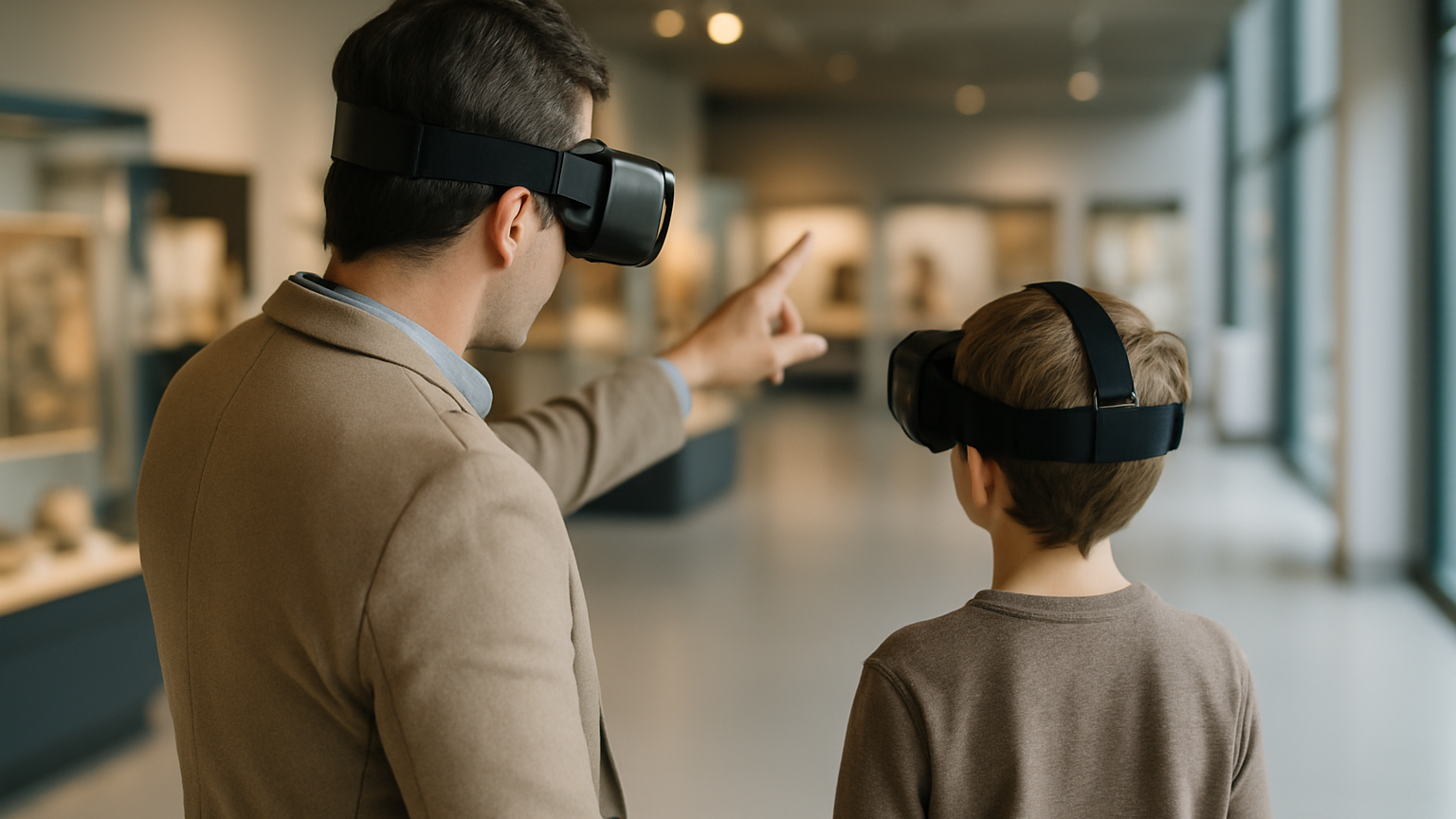
Visitors don’t just want to look at history anymore — they want to step into it, feel it, and walk out with a story worth sharing. A VR attraction for museums can do both: elevate the visitor experience and open new, trackable income streams. Think timed tickets, on-site upsells, and a post-visit memento that keeps the conversation going online. When the experience is short, intense and highly shareable, you get more people through, more buzz, and more reasons to come back with friends. That’s the sweet spot where immersion meets revenue, not a tech demo that gathers dust.
At RTE Global, we design immersive journeys that are simple to operate and scalable in real-world museum conditions. The point isn’t to add gadgets — it’s to add a narrative that moves people and a mechanism that monetizes attention without breaking the flow. Motion-synced seats, multi-user playback, and AI-powered photo moments don’t just wow guests; they also create clear value you can count. In practice, most museums see lines forming on weekends, so throughput matters more than exotic tech. Done right, the tech disappears and the story — plus the results — are what remain.
Why Now: The Business Case For Immersive Exhibits
Visitor expectations shifted from passive looking to active participation. Families want an experience they can do together in 10–15 minutes, capture a keepsake, and still have time for the rest of the galleries. Schools look for curriculum-aligned modules that justify the trip. Sponsors want visibility in an activation that actually draws a crowd. Investing in a VR attraction for museums is a way to meet all three in one compact, high-impact zone.
Revenue diversification is the second driver. A strong immersive exhibit can support timed-entry upsells, group bookings, and branded content moments without fragmenting your floor plan. The right experience creates a built-in merchandise opportunity — for example, a personalized AI photo in a themed environment that guests can download or print. Add a large-screen preview outside the zone and you amplify demand right in the gallery. It’s not just a fun add-on; it becomes a dependable cog in your financial model.
Finally, shareability closes the loop. If a visitor leaves with a unique photo or a short clip from their mission, they spread the story for you, tagging your venue and the exhibit name. That user-generated content acts like word-of-mouth at scale. You get more organic reach, better conversion for future visits, and stronger data to take back to sponsors. No fluff, just a clear line from experience to income.
What A Modern VR Exhibit Needs To Succeed Today
Start with a story that invites visitors to play a role, not just watch. Layer in synchronized multi-user playback so families or classmates share the same moment and talk about it afterwards. Keep the runtime focused — short, intense, and repeatable — to balance impact with operational flow. A motion platform (2DoF or 3DoF) adds physical cues that make the journey feel real without overwhelming sensitive visitors. Add a large-screen preview outside the zone so passersby immediately understand what’s happening inside.
Next, design for modularity. A VR attraction for museums should adapt to your footprint, audience profile and staffing model — from a complete interactive zone to a compact installation. Offer optional modules like AR objects, touchscreens, or browser-based content that extend learning before or after the main ride. Build an AI photo moment into the flow, ideally with themed suits or environments, so guests leave with something uniquely theirs. The experience becomes both memorable and measurable.
Operational resilience matters as much as wow factor. Headsets must be easy to clean and swap, content must sync reliably across seats, and accessibility should be planned from day one. That includes seated options, clear wayfinding, and a friendly opt-out path for guests who prefer a non-VR companion view. If you want a partner to map these layers to your venue, explore AR and VR services that were built specifically around museum workflows.
Mission Orbit: A Space Mission With Motion, Multi-User, And AI Photos
Mission Orbit turns a space mission into an immersive, cinematic experience. Visitors become crew members — from briefing and countdown to liftoff, orbit and a memorable photo moment. It’s designed for museums, science centres, entertainment venues and brand activations, with delivery as a complete interactive zone or a modular installation. The goal is simple: a strong emotional wow that’s easy to operate, scalable, and accessible for different age groups. Short, intense, and highly shareable.
Under the hood, Mission Orbit can include VR headsets, a motion platform (2DoF or 3DoF), synchronized multi-user playback and a large-screen preview. The AI-powered photo moment lets guests generate personalized images in space suits or cosmic environments. Optional AR, touchscreen or educational content modules extend the narrative for schools and enthusiasts. Families and school groups can experience the same mission at the same time, which keeps the social energy high and the queue moving. See what this looks like in practice in the Mission Orbit immersive experience.
Because the content is synchronized across multiple seats, throughput remains predictable even at peak times. The motion cues are tuned to feel real yet comfortable, and the format supports different age brackets without diluting the story. For venues with changing floor plans, the modular approach means you can scale the bay count up or down as seasons and school calendars shift. Sponsors get a centerpiece activation with naturally integrated visibility, not a logo slapped on a wall. That balance is what keeps Mission Orbit performing long after launch week.
Operational Realities: Throughput, Staffing, Accessibility
Throughput is the make-or-break metric. A tightly scripted pre-show, fast headset onboarding, and synchronized starts across seats help you run on a reliable cadence. Add a clear queue with time estimates and you reduce drop-off before purchase. A host who sets expectations in 20–30 seconds will save you minutes later. Small optimizations like color-coded bays or numbered seats keep groups together and lines smooth.
Staffing should match peak patterns, not averages. One operator can handle sanitization and fit checks while another runs the console and guest briefings; on quieter days, a cross-trained host can cover both. Build accessibility into the operating playbook: seated experiences, alternative content for guests who prefer no headset, and a companion screen so caregivers stay engaged. Training matters more than you think — confident staff lift satisfaction scores and reduce technical hiccups.
This isn’t for everyone. If you can’t allocate a small dedicated footprint, a minimal daily staffing window, or a basic cleaning routine, a VR zone will struggle to pay back. On the flip side, venues that commit to simple, repeatable operations see the benefit in both guest feedback and per-visit revenue. For teams looking to upskill quickly, our approach borrows from VR training technology so operators learn by doing, not by reading manuals. Sounds harsh, but true.
- Red flags to fix early: unclear queue flow, headset fit issues for kids, no plan for motion-sensitive guests.
- Green lights: synchronized starts, visible preview screen, a defined photo pickup point, and a short reset routine.
From Idea To Launch With RTE Global
With 140+ completed projects, we’ve learned that great immersive exhibits are equal parts story, systems and stewardship. Our playbook is collaborative by design — strategy, creative and technology move together from day one. We map narrative beats to operational beats so what thrills visitors also scales for staff. If you want a detailed look at how we work from discovery to deployment, here’s our software development process. Below is how that translates into a museum-ready launch.
Scoping And Prototyping
We start with a joint scoping workshop: narrative goals, educational outcomes, space constraints, target capacity, staffing model and sponsorship opportunities. From there, we build a rapid prototype — narrative outline, motion cues, multi-user flow and the AI photo moment — to validate the experience arc. Early on, we simulate throughput and queuing to shape the pre-show and reset routine. If needed, we create a lightweight in-gallery mockup so internal teams can test the guest journey. Those quick loops prevent expensive surprises later.
Build, Test, And Train The Team
Production covers content, motion integration (2DoF/3DoF), multi-user synchronization and large-screen preview. We stress-test headset fit across age ranges and rehearse sanitization and turnaround steps until they’re muscle memory. Technical QA runs in parallel with an operator playbook: greeting script, safety brief, quick-fit checks, and contingency paths for opt-outs. To shorten the learning curve, we incorporate elements of VR training technology so staff can practice scenarios before opening day. The goal is a confident team that makes the experience feel effortless.
Launch, Measure, And Iterate
Opening week is about clean data and fast adjustments. We instrument the experience to track plays, completion rates, photo take‑ups, queue times and guest satisfaction pulses. If a briefing runs long, we trim lines; if a moment underwhelms, we tune motion or timing. We also test small offers — family bundles, school add-ons, or sponsor tie-ins — and keep what converts. The exhibit keeps getting better, not just older.
Making ROI Visible: Metrics, Sponsorship, And Social Reach
Make the business story visible from day one. Tie your dashboard to the whole funnel: ticket selections, add‑on conversions, AI photo purchases and reprints, plus retail or cafe bumps from increased dwell time. Pair that with operational health — average cycle time, turnarounds, headset readiness — so you know what’s driving results. When you can point to a clean set of weekly metrics, it’s easier to secure renewals and additional funding. A board-friendly report beats a gut feeling every time.
Sponsorship thrives on alignment, not clutter. A space mission is a natural fit for aerospace, STEM or tech brands seeking interactive visibility. Because the experience includes a shareable AI photo, sponsors can extend their reach ethically — present in the moment without hijacking it. The large-screen preview acts like a live billboard in-gallery, drawing visitors to the activation and giving partners more impressions. No magic wand here, but a well-matched sponsor can offset CapEx and accelerate ROI.
Finally, track social lift as seriously as ticket sales. If guests post their mission photos with your handle and exhibit tag, that content fuels your next campaign. You can spotlight those posts on-site — a tasteful, rotating wall that acknowledges your community and keeps the loop alive. When word-of-mouth compounds, your VR exhibit becomes a recruitment engine for future members and donors. That’s when a VR attraction for museums stops being a novelty and starts being a dependable business asset.